“The single most important child rearing practice to be adopted for the development of emotional and socially healthy infants and children is to carry the infant on the body of the care giver all day long”.
In 1996 James Prescott in his piece “The Origins of Human Love and Violence” stated that “the single most important child rearing practice to be adopted for the development of emotional and socially healthy infants and children is to carry the infant on the body of the care giver all day long”. This statement has stuck with me since the first time I read it and is integral in explaining why slings and carriers can be an important tool for foster and adoptive families.
The act of carrying our young is not a new concept, carrying is in fact normal. It is one of the few universal things which unite nations and cultures (although we each have our own carrying methods and histories), as babies and small children want and need to be held. Observe a newborn and you will see how they turn their feet inwards to cling to their mother, their hands grasp to hold on and they bring their knees above their bottom into a fetal position once more. These primitive reflexes have survived our evolution and remain evidence of their need to be carried. For biological mothers and fathers it can be completely natural for them to want to pick their children up, to hold them to kiss them and to carry them and in doing so continue to develop the strong attachments between baby and parent that began when baby was in utero.
Attachments are deep and enduring emotional bonds that connects one person to another, they are the foundations on which we can grow. As demonstrated by Maslow’s Hierarchy of Needs simply providing a child with food and shelter is not enough for them to prosper. Safety, security and love are also needed.
Typically children will seek their attachment figure when they are upset or threatened (Bowlby, 1969) or when they feel unwell – there is therefore no spoiling baby by picking them up: it is meeting their basic need for love and reassurance. By choosing to use a sling parents are able to keep their baby close in order to be responsive and reactive to their needs. Neuroscientists Megan Gunnar and Bonny Donzella summed it up nicely when they wrote “the effect of sensitive, responsive, attentive caregiving is that it allows children to express and experience distress, communicate those emotions without stimulating increases in glucocorticoids.” As small babies and children have very few ways in which they can communicate; by keeping them close parents are able to pick up quickly and easily on non-vocal cues as well as respond to the more vocal.
 Children who have been separated from their care giver have also been shown to elicit a cortisol response and prolonged and extreme levels of cortisol negatively affect the developing brain. This stress hormone for example was shown to rise in one study in 1992 when securely attached 9 month old infants were separated for 30 minutes from their mother and left with a babysitter who although ensured the child was safe, did not respond to their needs. It is also known that cortisol increases in babies without secure attachments, so by adopting methods which can help increase attachment we can go some way to reduce cortisol levels in infants. Children unable to manage toxic prolonged stress by themselves and need the help of caring adults to support them (Middlebrooks and Audage, 2008). If this is not available and toxic stress is prolonged infant brain growth is effected (National Scientific Council on the Developing Child, 2005).
Unfortunately not all babies or small children have the benefit of a loving or safe home, with strong and secure attachment figures. As such they will not receive support from an adult capable of responding sensitively or appropriately to their needs. Bowlby’s early work into attachment theory led us to understand the need for strong attachments and he described these as a “lasting psychological connectedness between human beings”. Typically between a primary care giver (usually the mother) and a child and that this relationship had a strong effect on the child’s social, emotional and cognitive development. Children who are unable to form this strong bonds in early childhood are at a disadvantage; as securely attached children and adults live happier, less conflict ridden lives (Whitborne, 2005). Foster and adoptive families have an immense role in helping to form strong attachment bonds with the children they look after and to help those children who do not have strong attachment bonds to begin to form them.
Carrying adopted and foster children can help promote attachments with their adoptive/foster parents and ease transition to their new life. This does not mean immediately a child is placed with a family putting them in a sling but it is a useful tool that should not be discounted. Baronel and Lionetti in 2012 stated that adoption is “an intervention that assures the adoptive child the opportunity to catch up on emotional development and to partially resolve prior traumatic attachment experiences”. As using a sling has been shown to promote secure attachments between mother and child, primarily because of the speed by which mother could respond, we can therefore hypothesise that carrying an adopted child in a carrier could have the same benefits for attachment and this appears to be the case from case studies I found and from my own experiences.
There are several reasons why carrying a child in a sling can be helpful. These can typically be broken into health reasons and practical reasons. Using a sling or carrier has been shown to enhance growth and weight gain (Charpak, 2005), stabilize baby’s heart rate, resulting in lower cases of bradycardia and tachycardia (McCain, 2005), and even ease the symptoms of reflux (Tasker, 2002) to name just a few. While also simply giving the wearer their hands back, especially important if you have older children to care for, or for those days where baby simply doesn’t want to be put down. But the majority of research has been done between child and biological parents, primarily the mother. However, anybody can sling: parents, grandparents, child minders and nursery nurses, older siblings etc. Therefore carrying your child could be as important to adoptive parents as it is to biological parents, maybe even more so. This is one of the why for example The UP Project, a UK community interest company which provides free carriers to disadvantaged families, includes foster and adoptive families in the category of families they can help.
In 2009 Bick and Dozier found that when mothers engaged with biological and non-biological children, oxytocin production was higher after the interactions with the non-biological children. Oxytocin or ‘the love hormone’ has been associated with “attachment related thoughts” and there is a “general consensus that oxytocin has positive effects on human social behaviour” and a “secure attachment in infancy is important for normal psychological development…from which the infant explores the world beyond” (Campbell, 2010). Therefore the way in which close contact can help boost oxytocin production, and as a result attachment, can be seen as an important reason for adoptive and foster parents to carry the children in their care. This was supported by research conducted in 2007 which concluded that by replicating earlier missed experiences, such as close physical contact via the use of a sling, and being responsive to child’s needs, the caregiver would help the emotional development of child and promote attachment (Gribble, 2007). Gribble in this study began with the hypothesis that those physiological practices which help post-partum attachments should and could be applied to adopted children, and this seems to be the case from working with lots of families at sling library sessions.
For example, on one busy Saturday afternoon drop in session I had a visit from a Mum and Dad and their three children (two girls 3 and 2, and a baby boy of 9 months). A completely normal experience in my work. It was not until their 2nd visit that I discovered they were an adoptive family and they had come to find a sling: firstly for the practical reasons of getting their hands back but also to help with bonding. When I asked Mum why she chose to use the sling library she said that using slings had helped promote attachment with her baby and that “there does not exist the same closeness with our oldest child, who most people would have said at 3 and a half was too old to be carried”. Amazed that she could carry her older children Mummy A is now allowing her older children the opportunity to be carried to give them “the experience they never had as a youngster”.
“there does not exist the same closeness with our oldest child, who most people would have said at 3 and a half was too old to be carried”.
There are several different kinds of sling available and there are slings suitable for tiny premature babies through to pre-school and beyond, there is a carrier for all situations. One family who came to visit was Baby girl L and her mummy. With a dog that needing walking and a caravan they needed a sling. On this occasion Baby L had been placed with her parents from birth with them acting as foster parents while they went through the adoption process to avoid her having to be placed in temporary foster care. Born prematurely she was a tiny 5lb 1oz when she came to visit for the first time. After hiring a sling for 4 weeks Mum J told me that she want to try a sling “after a few people told me it was the next best thing to being pregnant”. Later on she was able to say that it has “most definitely helped with the attachment we have with Baby L”.
“after a few people told me it was the next best thing to being pregnant….most definitely helped with the attachment we have with Baby L”
 Sling library’s and babywearing consultants exist across the country and they want to help parents to find the carrier that works for them. It isn’t a one size fits all world. My own sling library has carriers that can comfortably carry up to 24kg thus allowing even older children to be carried close to their adopted parent as possible. An appropriately chosen sling or carrier for age and development of child should mean that the weight is distributed evenly and make it comfortable for the wearer. Babywearing is like any form of exercise, take it slowly and build up. Then the only limit on how long you carry your child is how you both feel about it. It will take your body a little time to adjust to the extra weight, but this gets easier the more you do it, so little and often is the key when starting to carry older children.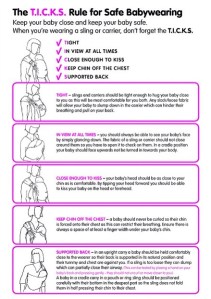
With so many different types of sling available it can be daunting where to start. Babies under 3 months have indiscriminate attachments, predisposed from birth to form an attachment to any care giver, for them stretchy wraps and carriers such as the Close Caboo™ offer a relatively easy and affordable entry into the sling world. Small babies are the most likely to want to be carried and this can make the transition to a sling easier for them. As with everything, it is important to ensure you follow all safety guidelines, especially the TICKS guidelines and manufacturers instructions.
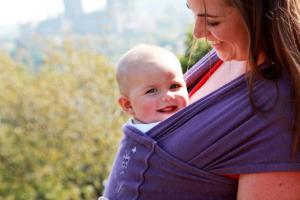
For older babies and toddlers who may not have had the same experiences of close contact it may take more time for them to adjust. A hip carrier, such as the Scootababy™, does not enclose them to the same degree as a wrap based carrier. It is possible with older to children to find carriers with patterns or pictures that they like, making it “their sling”, giving them some autonomy and choice in the process of selecting the carrier can make it easier for them to become adjusted to it. Choosing a sling with a variety of carrying positions is also helpful and building up how long you use the sling. For some children they may not want to be looking at the adults face but may prefer to be on their back, close but not too close, while others seek the security of their carers face.
There is no one size fits all solution. Take time to see what works for both carer and child. One family visited me and hired a carrier for their newly adopted 15 month old who had only just begun to walk. They hoped that the sling would allow them to get out and about but she was hesitant to go in the sling to start with and after a month coped with small periods only. They show that we cannot expect miracles straight away, we should always move only at the baby’s pace.
My final case study is a story of international adoption. Thank you D, her husband A and baby R for letting me share. In the spring of this year they adopted an 1.5 year old little boy from China. They took with them a carrier with them and I want to finish with her description of using the carrier: “it was particularly useful on the internal and international flights and trips. It was such a brilliant way to bond with my new son, keeping each other cosy. R accepted the carrier without complaint, in fact he accepted everything about his new life with good humor and curiosity, and trusted us from the start. He is amazing. We are so lucky to be his parents, and I love being his Momma”. R demonstrates the resilience of children. The freedom and joy that the carrier gave them is the same freedom and joy biological parents, grandparents and aunties and uncles feel when they use a sling, let us make it the norm for adoptive and foster families too, after all Carrying is normal.
“It was such a brilliant way to bond with my new son, keeping each other cosy. R accepted the carrier without complaint, in fact he accepted everything about his new life with good humor and curiosity, and trusted us from the start.”
Finally I am going to leave you with a few words of wisdom from the first foster mum who got me interested in the benefits of sling use for adoptive and foster families, I feel she speaks the clearest of any of us.
“Part of the reason it can help is children that may have attachment issues when they are adopted, and need security, a feeling of safety and above all else to be claimed. Using the sling as one means of promoting that close contact and parental availability all assists in the vital settling in and bonding period. Added to this the practicality of a sling as an excellent means of transport can be invaluable to a parent learning the job.”
Background
This blog was originally published in 2014 as part of my Slingababy consultancy community project. The original blog can be viewed here. I was then approached by the organisers of the 2015 Northern Sling Exhibition to present a seminar on the topic. This blog is a reworking of original piece and includes more on attachment . Case studies are anonymous to protect the families involved.
References
Anisfeld E, Casper V, Nozyce M, Cunningham N. (1990) Does Infant Carrying Promote Attachment? An Experimental Study of the Effects of Increased Physical Contact on the Development of Attachment. Child Development 61:1617-1627.
Baronel L and Lionetti F, ‘Attachment and emotional understanding: a study of late adopted pre-schoolers and their parents’, Child Care Health Development, 2012 Sept 38 (5)
Bick J and Dozier M, ‘Mothers and children’s concentrations of oxytocin following close, physical interactions with biological and non-biological children’, Psychobiology 52: 100-1007, 2009
Bowlby J. (1969). Attachment. Attachment and loss: Vol. 1. Loss. New York: Basic Books.
Campbell A, ‘Oxytocin and Human Social Behaviours’, Personality and Social Psychology Review, April 2010, p. 281-296
Charpak, N., “Kangaroo Mother Care: 25 Years After,” Acta Paediatric 94 2005: 5, 514-522.
Gribble, K.D, ‘A model for caregiving of adopted children after institutionalization’, Journal of Child and Adolesent Psychiatric Nursing, Feb 2007, Vol 20:1, p.14-26
Gunnar MR, Donzella B. Social regulation of the cortisol levels in early human development. Psychoneuroendocrinology 2002; 27: 199-220
Middlebrooks JS, Audage NC. The Effects of Childhood Stress on Health Across the Lifespan. Atlanta (GA): Centers for Disease Control and Prevention, National Center for Injury Prevention and Control; 2008.
McCain, G et al. “Heart Rate Variability Responses of a Preterm Infant to Kangaroo Care,” 2005 Journal of Obstetrics,
National Scientific Council on the Developing Child (2005). Excessive Stress Disrupts the Architecture of the Developing Brain: Working Paper No. 3. Retrieved from http://www.developingchild.harvard.edu
Prescott, J. ‘The Origins of Human Love and Violence’, Pre and perinatal psychology Journal, Spring 1996, Vol 10;3 p. 155
Tasker, A., Dettmar, P. W., Panetti, M., Koufman, J. A., Birchall, J. P., and Pearson, J. P. (2002). Is gastric reflux a cause of Otitis media with effusion in children? The Laryngoscope, 112:1930–1934
Whitborne, S,K. “The 4 Principles of Attachment Parenting and Why They Work” in Psychology Today 2013, July

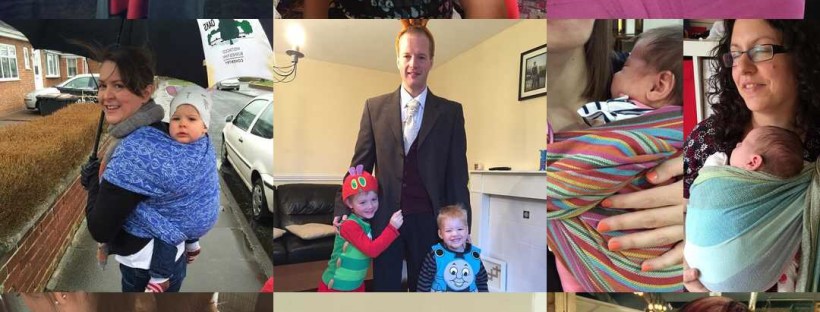
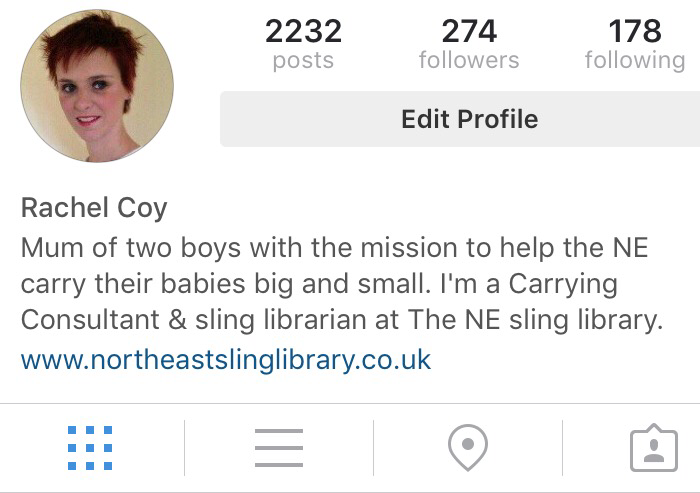 I am @neslinglibrary on Instagram if you don’t yet follow me. I share photos of everyday life as well as sling library. I do after all describe myself in my profile bio as:
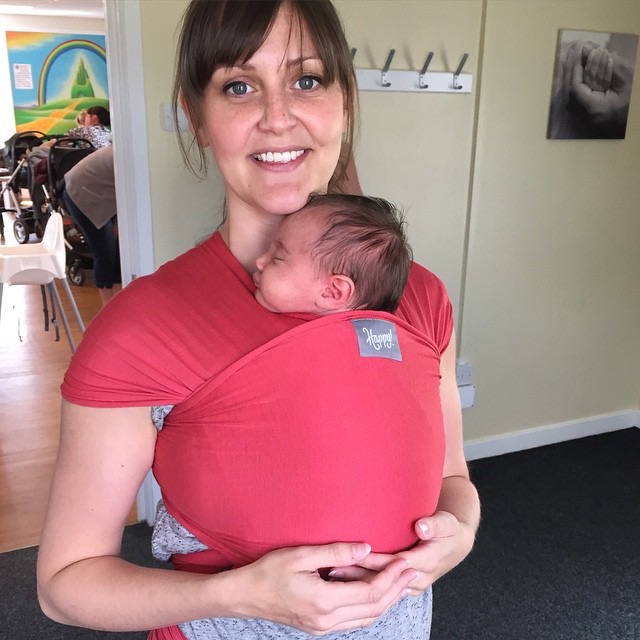

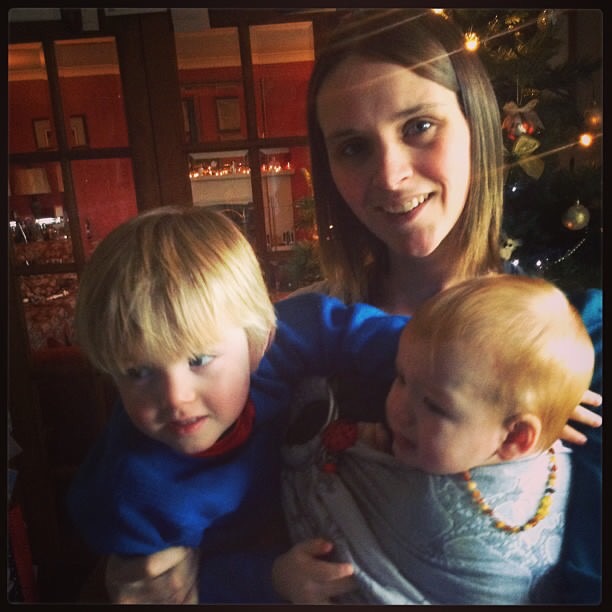
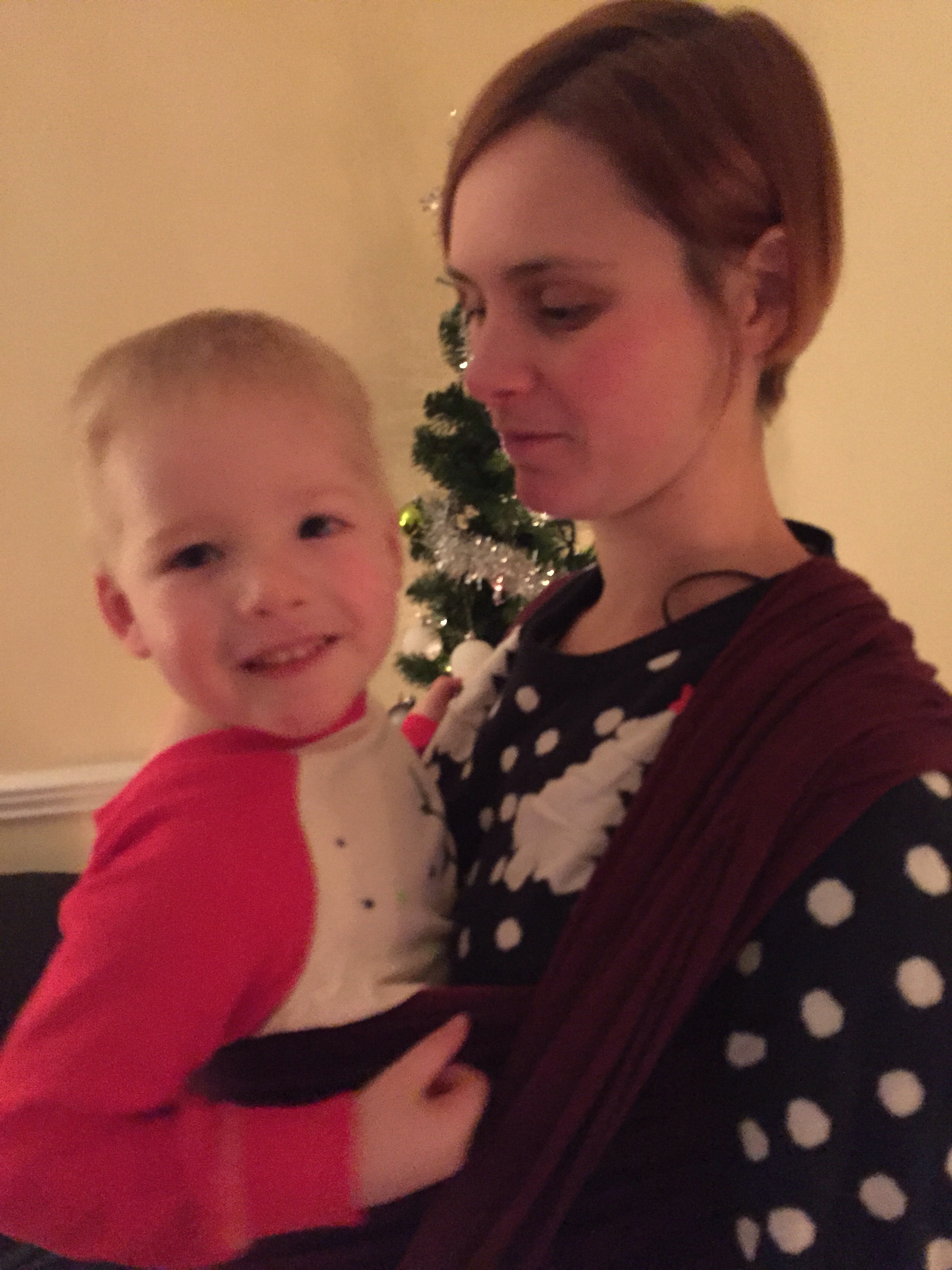
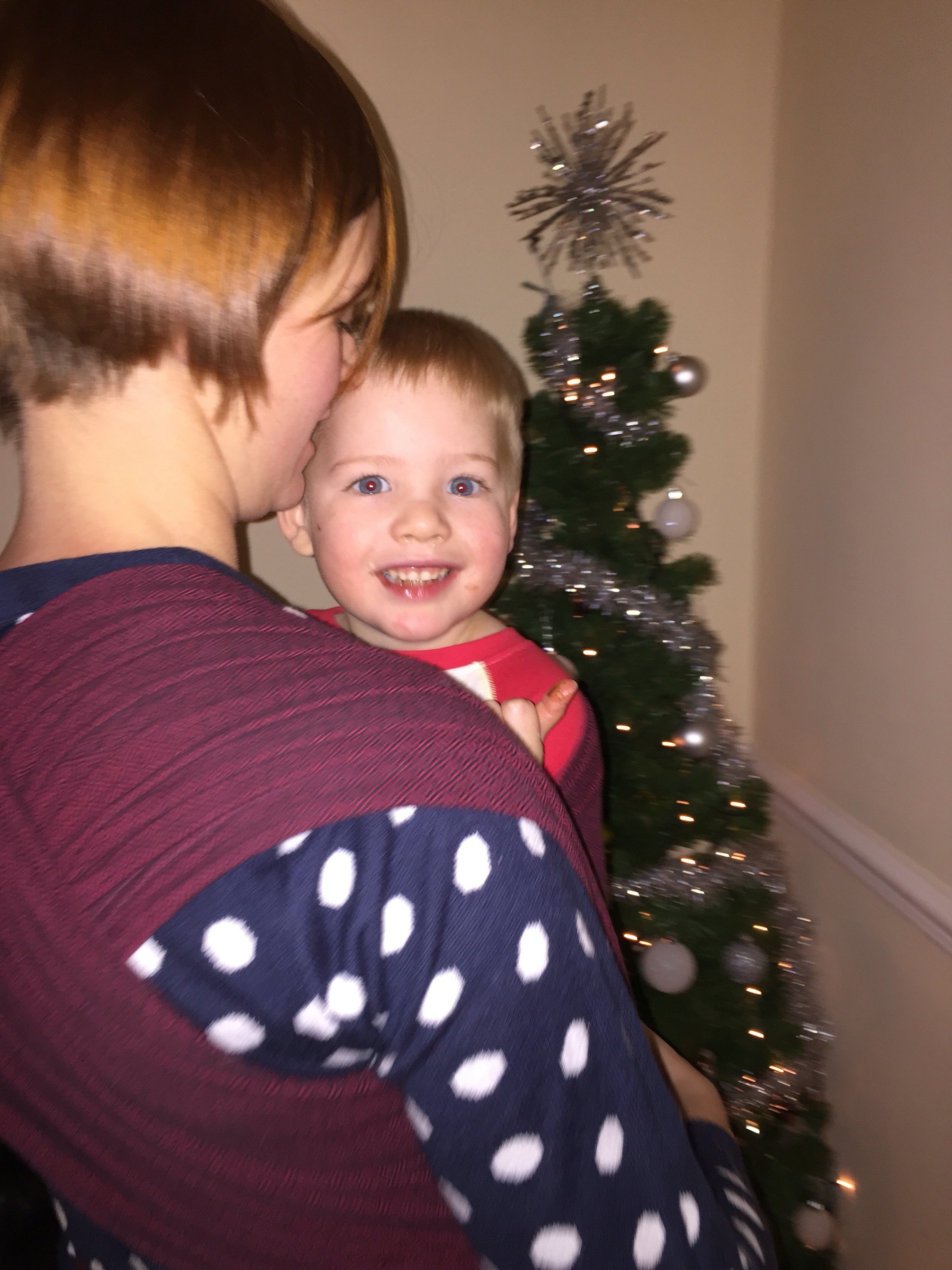




 Using a sling is a rather nifty way of getting both your hands back and they can come into their own at Christmas. I have spent lots of time explaining the
 Quality time with Dad or other care givers allowing them to bond. The benefit of the holidays is that for most there is an extended period of time off work, giving them the time to spend with their little ones.
 Allows you to keep a close eye on their feeding cues and being responsive to their feeding needs, whether breast or bottle fed, by keeping them close.
 Only one small drop of gravy on him.



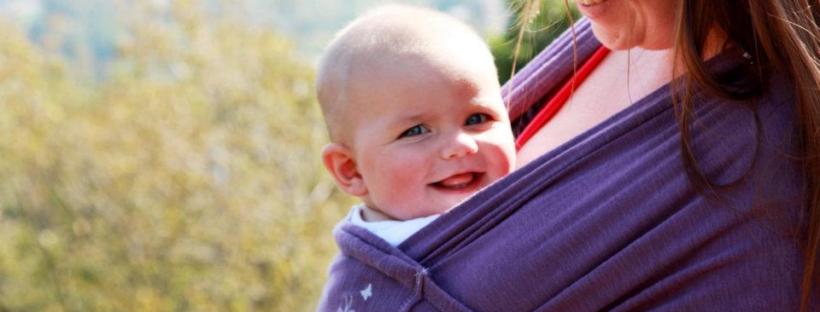



 Slings and More