I am extremely proud of my profession. I am a teacher by training and practice. Although I no longer teach in a classroom teaching teenagers I do spend my days teaching new parents how to carry their children comfortably and safely. I am a Babywearing Consultant. I have spent several thousand pounds training, I attend regular continuous professional development, I have insurance costs and pay subscriptions to our voluntary professional body. I know my area of expertise is slings and carriers, baby handling and sling safety. I know where to draw the line. I know I am not a doctor. I do not give medical advice. Despite being a breastfeeding mum and breastfeeding peer supporter I know I cannot diagnose feeding issues. I know when to refer to those who do know more than me. I know my professional boundaries.
When I see posts dismissing what I and many others do it is extremely hard not to be offended. Unfortunately, a recent social media post, and then subsequent dismissive comments, by a well-known breastfeeding expert has caused upset to my profession.
If you are going to share material that is not within your area of expertise it is only correct that those of us who do work in that area identify flaws and sign post to sources of help. How many of us would start a reply with the words “Oh Please”? Does it seem respectful? Non-judgmental or professional? I think most of us would agree it doesn’t. It appears rude and disparaging; especially when you are commenting on something you only have your own experience of doing (and when you have openly criticized the role of peer support in your industry). I was especially taken aback by this. It was certainly not the way I thought a respected International Board Certified Lactation Consultant (IBCLC) would start a reply.
IBCLC are in a highly privileged position; their title is a protected one. This means you cannot simply start calling yourself one. It takes years of training and recertification every 5 years. However, IBCLC have not always existed. They began after a loan from La Leche League International in 1985 in a move to professionalize the industry. The Lactation Consultants of Great Britain has an even newer history forming in 1994. Nobody would say a IBCLC has less importance than a Midwife, or Physiotherapist or any health care professional – but each would agree that they all have their own area of expertise. It is not necessary to see an IBCLC to breastfeed, but if having difficulties then it has benefits. IBCLC are trained to assess a feed in detail; for example, look at the structure of the mouth, transfer of milk, tongue function, suck and swallow of the baby. In same way that a midwife is trained to care for a mother in the antenatal period, and to help deliver her baby and care for the mother and newborn in first few weeks postnatally. Their professional expertise though does not stretch to caring for a 2 or 3-year-old. Here, a health visitor would be qualified to help. Knowing where our professional boundaries and personal experiences lie, is crucial.
Babywearing Consultants do not have the luxury of a protected title. Currently, anybody can choose to call themselves one. It is only in the last few years that there has been a growth in our number and an increase in training opportunities. We are experts in our field. There are moves to create national and international standards and a regulation of our industry. A move I wholeheartedly applaud. It is why I already subscribe to the British Association of Babywearing Consultants (BABI). Babywearing Consultants are attempting to professionalize our industry in the same way IBCLC did in 1985. Just because we are still in the process of doing so does not mean our knowledge or expertise is any more or less needed than that of IBCLCs: we simply have different areas of expertise.
Babywearing is a millennia old activity. For as long as humans have needed to move, we have needed to carry our young. Our babies are born helpless; unable to care for themselves and completely dependent on their parent or care giver to meet every need. By carrying our young we are able to respond quickly and efficiently to their ever changing needs. All cultures have a tradition of carrying their young; although the methods vary widely. This tradition though has disappeared in the western world. Skills traditionally passed from mother to daughter have disappeared. It is only in the comparatively recent past that there has been a resurgence in its popularity. Babywearing, like breastfeeding, became unfashionable. It has taken the growth in breastfeeding support: from peer to peer support through to IBCLC, and international laws around infant formula marketing to help increase breastfeeding rates. The growth of sling libraries and Babywearing consultants in the last 4 years is unprecedented. The increasing understanding of ergonomic baby carriers and availability on the high street is making it much accessible.
Newborn and small babies, and those with underlying health conditions, are particularly at risk when being worn in a sling when it is worn incorrectly. This is why the TICKS guidelines were developed in 2010. They have become widely accepted as best practice for safe Babywearing. Unfortunately, if not followed (or supplied) there is a risk of a baby suffering from positional asphyxia. Any internet search about safe Babywearing will bring up stories of where things have gone wrong. As a Babywearing Consultant it is my job to help teach parents how to minimize those risks. I work step by step, in detail, focusing on the small things which make a big difference: tightening, safety, positioning, comfort. 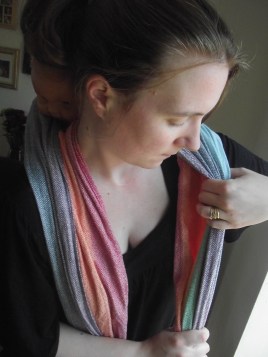 This is why Babywearing consultants suggested that if you are going to back carry a small baby (something that can be achieved safely if you know what you are doing), that you do seek support, especially if you have limited knowledge of carrying your children in a sling. To suggest we are not necessary is to oversimplify the issue. No, it is not necessary to always have a consultation but there are times and places where it is advantageous. I have helped parents carry babies born extremely prematurely, with Development Dysplasia of the Hip (DDH), Talipes, multiple births, breathing difficulties, congenital heart defects, genetic disorders and hyper mobility to name just a few. As well as parents who just want some 1:1 support to get it right first time.

Dismissing the role, myself, and other Babywearing Consultants, has the potential to be fatal. Please, give us some common courtesy as well as professional respect. We will stick to teaching how to carry babies safely, and will point out if there are weaknesses with technique that could be dangerous. Let other professionals stick to their specialisms. This way we can work together to support new parents for the benefit of them and their babies.

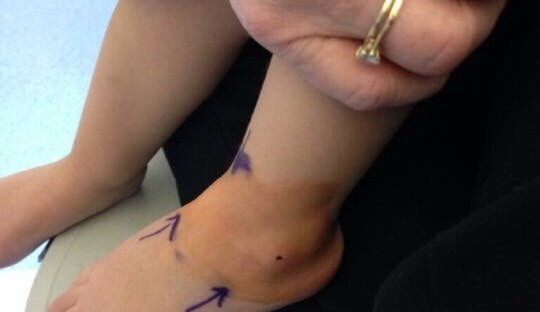
 Since Olivia’s diagnosis Kirsty has trained as a babywearing peer supporter with Born to Carry.


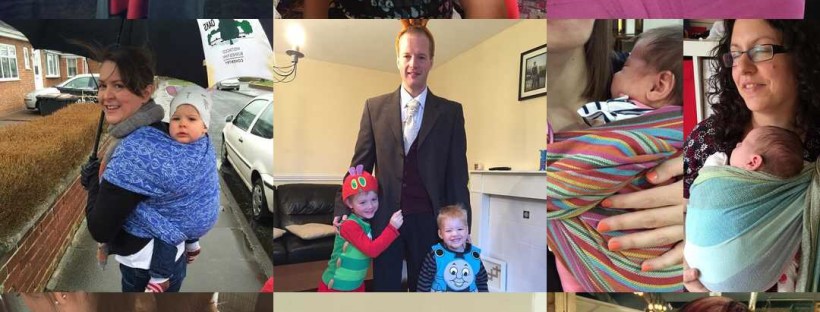


 Using a sling is a rather nifty way of getting both your hands back and they can come into their own at Christmas. I have spent lots of time explaining the
 Quality time with Dad or other care givers allowing them to bond. The benefit of the holidays is that for most there is an extended period of time off work, giving them the time to spend with their little ones.
 Allows you to keep a close eye on their feeding cues and being responsive to their feeding needs, whether breast or bottle fed, by keeping them close.
 Only one small drop of gravy on him.

 Slings and More